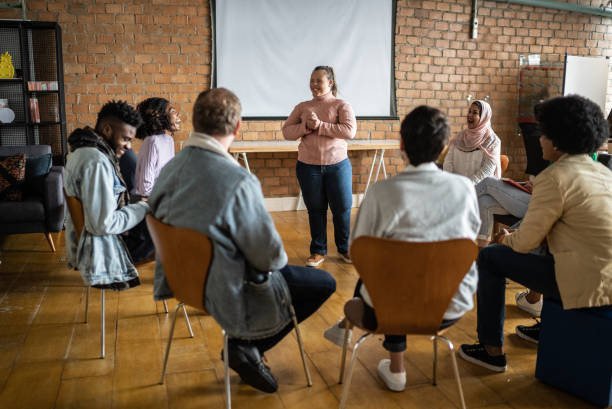
Speech therapy is a vital tool in enhancing communication skills, particularly for individuals with speech and language disorders. In a group therapy setting, the dynamics shift to foster a collaborative and interactive environment. This approach not only broadens the scope of learning but also builds a community of support among participants. For therapists, the challenge lies in crafting engaging and effective speech group activities that cater to diverse needs and skill levels. This article explores innovative and practical ideas for speech group activities that can be integrated into therapy sessions to maximize therapeutic benefits.
Interactive Storytelling
Storytelling is a powerful way to engage group members and encourage active participation. By using interactive storytelling, therapists can foster creativity and improve communication skills.
- Assign roles to each participant to act out parts of a story. This encourages expressive language and social interaction.
- Use props or visual aids to stimulate imagination and make the activity more engaging.
- Encourage participants to add their own twists to the story, enhancing creativity and spontaneity.
Role-Playing Scenarios
Role-playing is an effective method to practice real-life communication scenarios in a safe and supportive environment.
- Design scenarios that reflect everyday situations, such as ordering food at a restaurant or making a phone call.
- Encourage participants to switch roles to experience different perspectives.
- Provide feedback and guidance to help participants improve their communication strategies.
Communication Games
Games can make speech therapy sessions lively and enjoyable while reinforcing communication skills.
- Play games like ‘Charades’ or ‘Pictionary’ to enhance non-verbal communication and creativity.
- Use board games that require verbal interaction, such as ‘Taboo’ or ‘Guess Who?’ to practice articulation and vocabulary.
- Incorporate digital games or apps designed for speech therapy to keep the activities modern and relevant.
Group Discussions and Debates
Facilitating group discussions or debates can help participants practice structured speech and learn to articulate their thoughts clearly.
- Select topics that are relevant and interesting to the group, ensuring engagement and participation.
- Encourage respectful listening and turn-taking to foster a supportive group environment.
- Provide prompts or questions to guide the discussion and ensure that everyone has the opportunity to contribute.
Art and Music Integration
Integrating art and music into speech therapy can unlock creative potential and enhance emotional expression.
- Use music exercises, like singing or rhythmic clapping, to improve speech rhythm and fluency.
- Encourage participants to create art projects that represent their thoughts or feelings, facilitating non-verbal communication.
- Organize group performances to build confidence and enhance speech clarity in front of an audience.
Conclusion
Incorporating these creative ideas into speech group activities can greatly enhance the therapeutic experience for participants. By focusing on interactive and engaging approaches, group therapists can cater to a wide range of communication needs, making therapy sessions productive and enjoyable. These activities not only improve speech and language skills but also build a sense of community and mutual support among group members. With thoughtful planning and execution, speech group therapy can be a transformative experience for all involved.