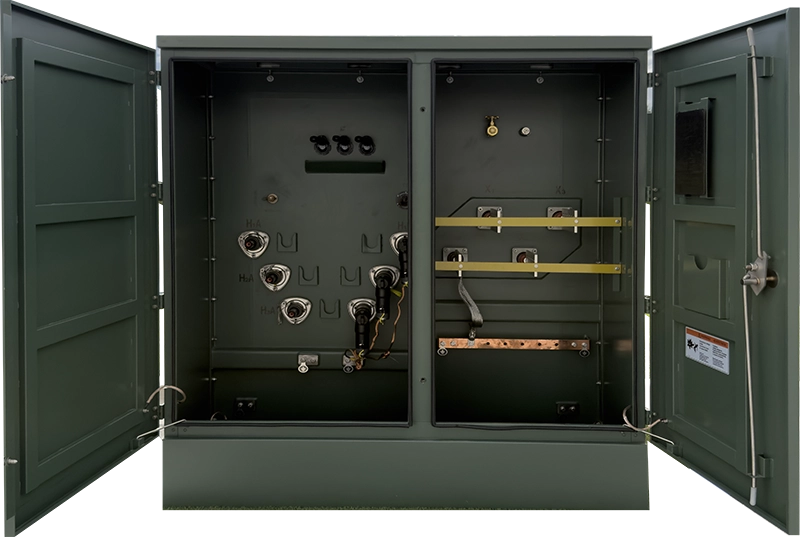
Three-phase distribution transformers are the backbone of modern electrical grids, converting high-voltage transmission power to the lower voltages required for residential, commercial, and industrial use. Their robust design, efficiency, and ability to handle large power loads make them indispensable in the reliable delivery of electricity. Understanding how these transformers function, their typical applications, and the factors influencing their selection is essential for engineers, planners, and anyone involved in power distribution.
Fundamentals of Three-Phase Distribution Transformers
At their core, three-phase distribution transformers consist of three single-phase windings that share a common core. This configuration enables balanced power transfer across all three phases, reducing losses and improving system stability. Key characteristics include:
- Voltage Transformation: Step-down from medium-voltage (e.g., 11″?kV, 33″?kV) to low-voltage levels (e.g., 400″?V, 480″?V) suitable for end-user consumption.
- Efficiency: Modern designs achieve efficiencies above 98″?% thanks to low-loss core materials and optimized winding techniques.
- Load Balancing: The three-phase arrangement inherently balances loads, minimizing neutral currents and reducing voltage fluctuations.
Core Construction and Materials
The core is typically made of grain-oriented silicon steel, which minimizes hysteresis losses. For high-performance installations, amorphous-metal cores may be used to further reduce no-load losses, extending the transformer’s service life.
Winding Configurations
Common winding connections include:
- Delta-wye: Provides a neutral point for the low-voltage side, facilitating the connection of single-phase loads.
- Wye-wye: Used where a neutral is required on both sides, often in industrial settings.
- Delta-delta: Suitable for applications that do not need a neutral, offering higher short-circuit strength.
Key Applications in Power Distribution
Three-phase distribution transformers are deployed across a wide range of environments. Their versatility allows them to serve both urban and rural networks, as well as specialized installations.
Urban Distribution Networks
In densely populated areas, space constraints demand compact solutions. 3 phase pad mounted transformer designs are frequently installed on concrete pads or within enclosures, providing easy access for maintenance while occupying minimal footprint.
Rural and Remote Installations
For remote substations, transformers are often mounted on steel structures or placed in weather-protected vaults. The rugged construction of a three phase pad mounted transformer ensures reliable operation despite exposure to harsh environmental conditions.
Industrial Facilities
Heavy-duty manufacturing plants require transformers capable of handling high inrush currents and fluctuating loads. Selecting a three phase distribution transformer with appropriate impedance and cooling methods (oil-filled or dry-type) is critical for maintaining operational continuity.
Selection Criteria for Optimal Performance
Choosing the right transformer involves evaluating several technical and practical factors. The following checklist assists engineers in making informed decisions:
- Voltage Rating: Ensure compatibility with upstream transmission voltage and downstream consumer voltage.
- Power Capacity (kVA): Match the transformer’s rating to the anticipated maximum load plus a safety margin.
- Impedance (%): Determines short-circuit current levels and voltage regulation; lower impedance improves regulation but may increase fault currents.
- Cooling Method: Oil-immersed units provide superior heat dissipation for high-load applications, while dry-type units are preferred where fire safety is a concern.
- Installation Environment: Consider pad-mount versus pole-mount configurations based on space, accessibility, and environmental exposure.
- Regulatory Compliance: Verify conformity with IEC, ANSI, and local standards for safety and performance.
Case Study: Implementing a 3″?kVA Pad-Mount Solution
A suburban utility needed to upgrade its feeder line to accommodate new residential developments. By installing a three phase pad mount transformer on a reinforced concrete pad, the utility achieved:
- Reduced line losses by 12″?% due to closer proximity to end users.
- Improved voltage stability across the new development.
- Simplified maintenance thanks to the transformer’s accessible location.
Maintenance Best Practices
Even the most reliable transformers require routine inspection to sustain performance and extend service life. Key maintenance activities include:
- Visual Inspection: Check for oil leaks, corrosion, and physical damage.
- Electrical Testing: Perform insulation resistance, turns-ratio, and load-loss measurements annually.
- Thermal Monitoring: Use infrared thermography to detect hot spots that may indicate winding issues.
- Cleaning: Remove dust and debris from cooling fins or radiators to maintain efficient heat dissipation.
Future Trends in Three-Phase Distribution Transformers
Advancements in materials science, digital monitoring, and grid integration are shaping the next generation of distribution transformers.
Smart Monitoring and IoT Integration
Embedded sensors now enable real-time condition monitoring, allowing utilities to predict failures before they occur. Data from these devices can be integrated with grid management platforms to optimize load balancing and reduce downtime.
Eco-Friendly Designs
Manufacturers are exploring biodegradable insulating fluids and recyclable core materials to reduce environmental impact. Such innovations align with global sustainability goals while maintaining high efficiency.
Modular and Scalable Solutions
Modular transformer units can be combined to meet increasing demand without replacing the entire system. This flexibility supports rapid urban expansion and facilitates phased upgrades.
Conclusion
The 3 phase distribution transformer remains a pivotal component in delivering safe, reliable, and efficient electricity to end users. By understanding its operating principles, selecting the appropriate configuration, and adhering to rigorous maintenance regimes, utilities and engineers can ensure optimal performance throughout the transformer’s lifespan. As technology evolves, the integration of smart monitoring, sustainable materials, and modular designs will further enhance the role of three-phase distribution transformers in modern power networks.