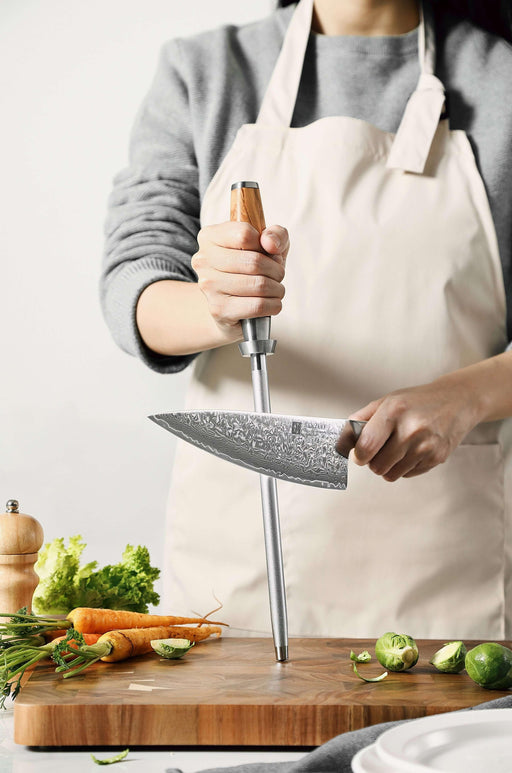
In the culinary world, the sharpness of your knife can make a significant difference between a pleasurable cooking experience and a frustrating one. While many people often focus on sharpening their knives, honing is an equally important practice that is sometimes overlooked. Honing rods are indispensable tools for maintaining the edge of a knife, ensuring precision and efficiency in the kitchen. This guide will walk you through the essentials of using a knife honing rod effectively, enhancing your cooking adventures and maintaining your kitchen tools in prime condition.
Understanding the Difference Between Honing and Sharpening
Before diving into the specifics of using a honing rod, it’s crucial to understand how honing differs from sharpening.
- Honing involves realigning the blade’s edge without removing significant metal. It maintains the edge between sharpening sessions.
- Sharpening removes metal to create a new edge, necessary when the knife becomes dull.
To keep knives in optimal condition, regular honing is recommended. If you want to learn more about this approach, find out more about this approach.
Choosing the Right Honing Rod
Selecting the appropriate honing rod is the first step in effective knife maintenance. There are several options available, each with its own advantages.
Types of Honing Rods
- Steel Rods: The most common type, ideal for standard kitchen knives.
- Ceramic Rods: Harder than steel, suitable for harder steel knives.
- Diamond Rods: Coated with diamond dust, these are more abrasive and can actually sharpen slightly while honing.
For a comprehensive understanding of which honing rod suits your needs, you can explore advanced guides and tips.
Steps to Using a Knife Honing Rod
Preparation
Before honing, ensure that the rod and knife are clean. A clean environment prevents additional wear and tear on the blade edge.
Proper Technique
- Hold the Rod: Grip the handle of the honing rod firmly in one hand. Position it vertically with the tip resting on a non-slip surface.
- Position the Knife: Hold the knife at a 15-20 degree angle against the rod.
- Stroke the Blade: Glide the knife down the rod, maintaining the angle, and applying gentle pressure. Repeat this motion on the opposite side of the blade.
- Repeat: Perform the stroking motion 5-10 times per side for balanced honing.
Adopting these techniques ensures the longevity of your knives. Discover expert strategies here.
Maintaining Your Honing Rod
Regular maintenance of your honing rod enhances its effectiveness and lifespan.
- Cleaning: Wipe down the rod with a damp cloth after use. For deeper cleaning, use a mild detergent and soft brush.
- Inspection: Check for any wear or damage periodically, especially if using a ceramic or diamond rod.
Routine maintenance ensures your honing rod functions optimally. Learn about our tailored solutions for more insights.
Conclusion
Incorporating a honing rod into your kitchen routine is a simple yet effective way to maintain the sharpness and functionality of your knives. Regular honing reduces the need for frequent sharpening, preserving the lifespan of your blades. By selecting the right rod and mastering the correct technique, you can ensure that your culinary tools remain in peak condition, enhancing every cooking experience. To delve deeper into honing practices and select the best tools, explore advanced guides and tips.